A warm place for little minds and big feelings

Why the woodland exists

Stories first.
A safe opening for words.

The Little Woodlands Feelings Lab grew from listening to children whose feelings did not always arrive in neat sentences — and to the grown-ups trying to stay nearby.

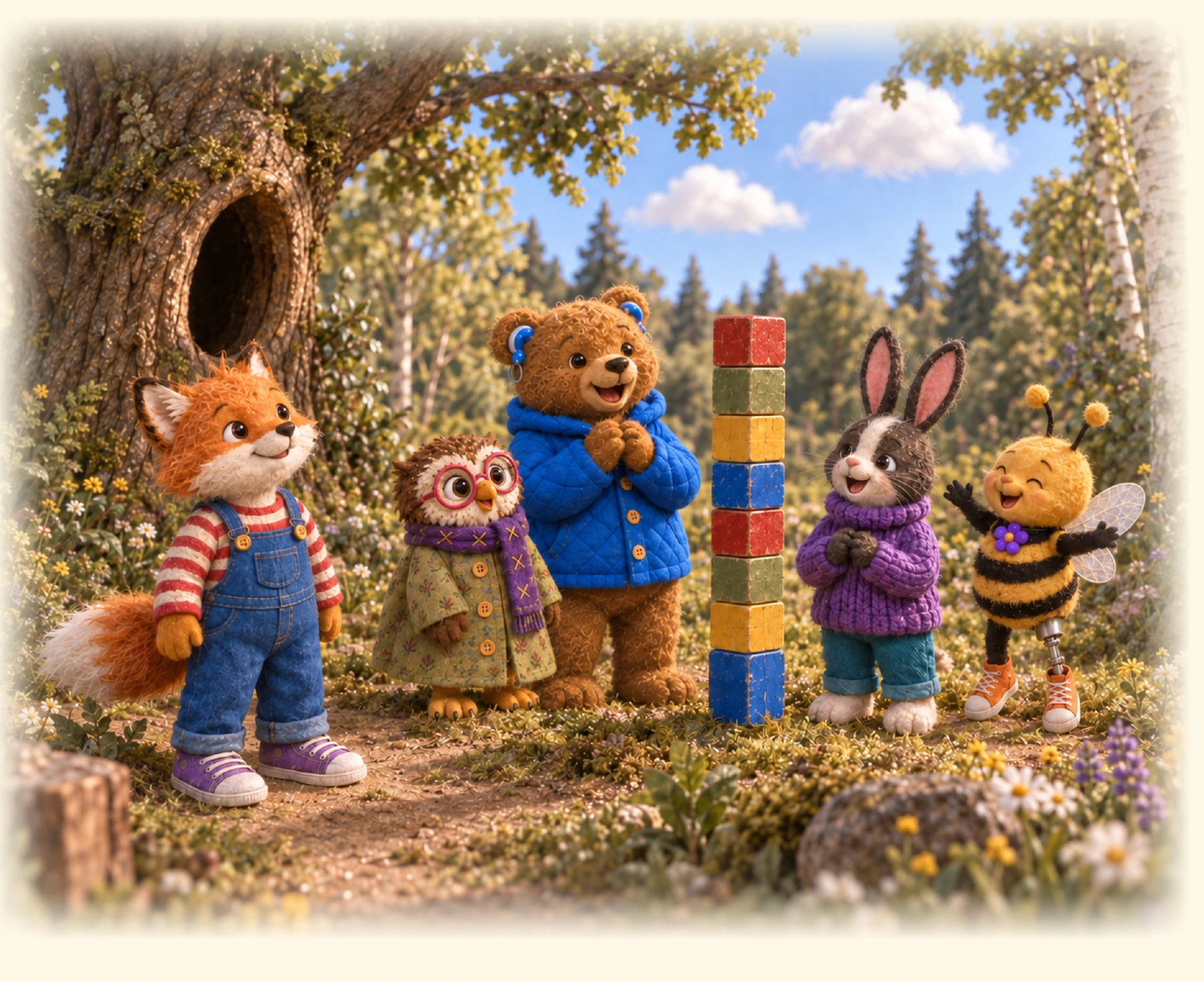
Fuzz, Berty, Olive, Roux and Belle together in their warmly lit stitched-puppet woodland

Where the stories began

Feelings do not always
arrive as words.

Little Woodlands is a place to share a story and spend a little time with feelings. Fuzz and his friends meet frustrating mornings, missing someone and the wobbles of trying something new. Follow the pictures, enjoy the characters and leave room for whatever your child wants to say - or simply keep reading.

Created with the insight of registered mental health clinicians, the stories offer a place to pause and begin a conversation without one correct answer. You do not need a perfect question or a finished activity. One page, a favourite picture or a quiet moment together can be your whole visit.

The aim is not to remove every difficult feeling. It is to help a child feel listened to, understood and less alone while a trusted grown-up stays nearby.

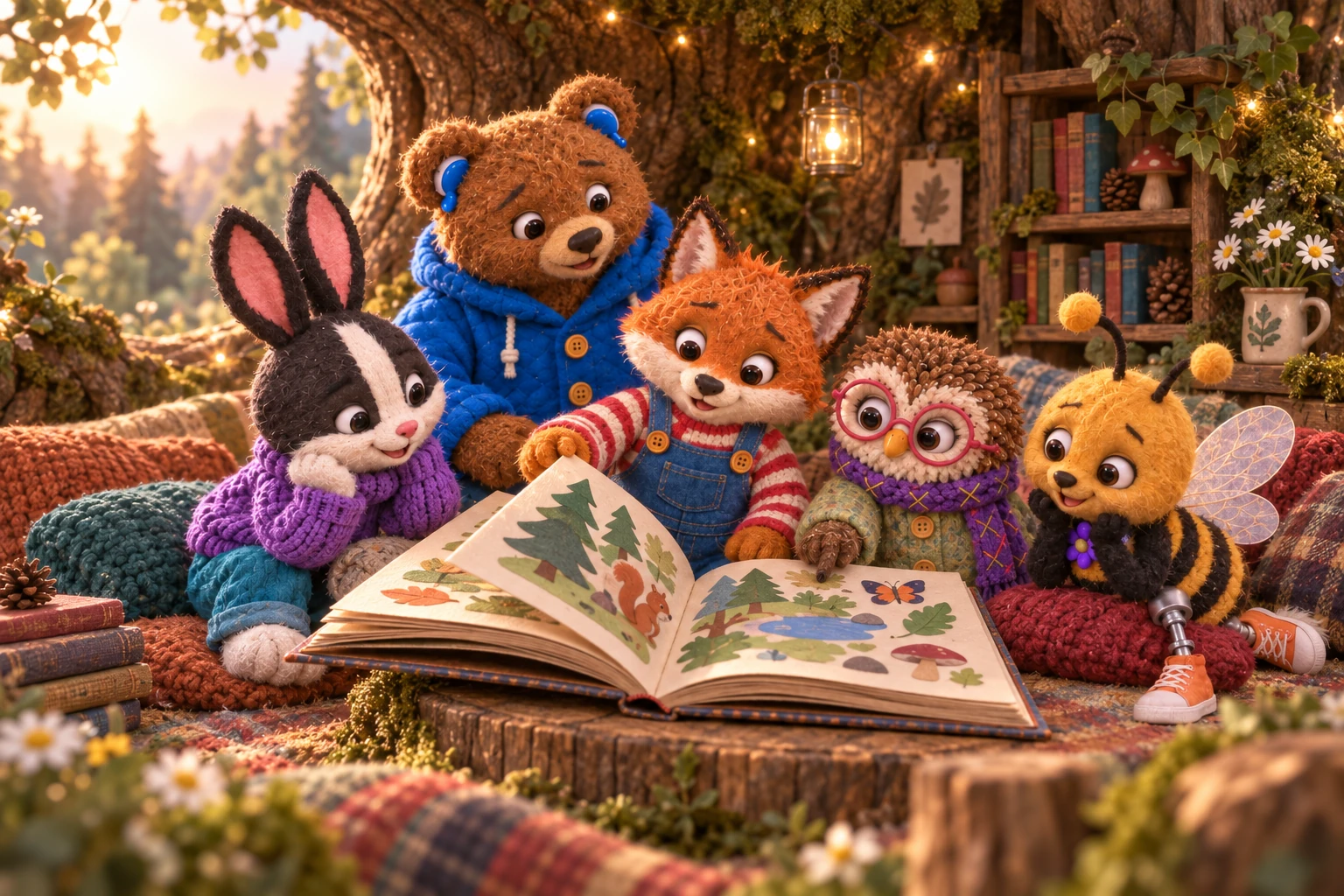
Fuzz and his friends gathered around an open storybook in a cosy stitched-puppet woodland nook
Stories, creativity and a little time together.

Stories first

Professional insight
woven through.

Created with the insight of registered mental health clinicians. It informs the emotional accuracy, boundaries and optional grown-up guidance. It does not turn the story into a worksheet or make the website a clinic.

The “Feelings Lab” is a creative place for noticing, exploring and talking — not a research institution, treatment service or diagnostic centre.
Inclusion in the woodland

Difference is present
without becoming a lesson.

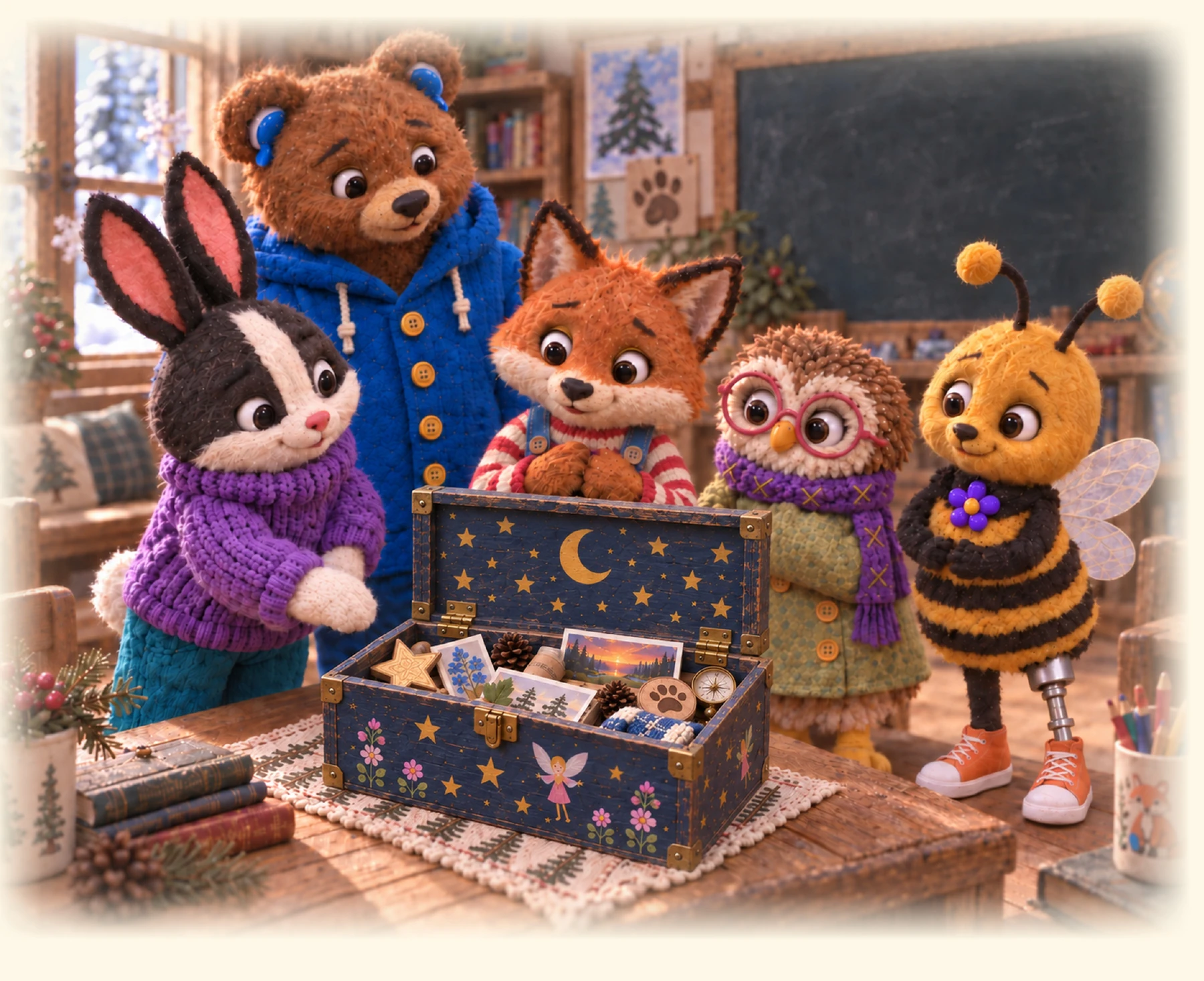
Berty’s hearing aids and Belle’s prosthetic leg are part of their lives, not problems to overcome. The friends communicate, participate and need help in varied ways, just as children do.

Representation is reviewed against the approved manuscripts and artwork so clothing, assistive devices and character identity remain consistent.

About the author

Francis Ferndown

Francis Ferndown writes the Fuzz Fox and Friends stories with the insight of registered mental health clinicians.

The writing begins with character, story and an emotionally recognisable moment. Clinical knowledge is used to keep the language safe and thoughtful, not to prescribe a single response. Resources are checked against the manuscripts, safeguarding boundaries and the project’s commitment to optional participation.

How resources are reviewed

Warm enough for a child.
Clear enough for a grown-up.

  1. 01

    Source — grounded in the published story and canonical artwork.

  2. 02

    Boundary — no diagnosis, forced disclosure or promised outcome.

  3. 03

    Access — readable HTML, printable PDF and practical alternatives.

  4. 04

    Safeguarding — clear routes back to the adults and systems around the child.

Questions grown-ups often ask

A few clear answers
before you begin.

Who are the stories for?

They are written for children, families, educators and other trusted grown-ups. Each book has age guidance, but readiness depends on the child, the subject and the support around them.

Are these therapy books?

No. They are stories and conversation resources, not therapy, assessment or diagnosis. Professional insight informs the writing, but the story comes first.

Do I need to ask questions after reading?

No. A child may want to talk, draw, move, listen quietly or simply enjoy the story. Optional prompts are there for moments when they feel useful.

Can teachers use the resources?

Yes. Free resources may be printed for one class or setting. Participation should remain optional and safeguarding procedures still apply.

Why do the characters include disabilities and different needs?

Children encounter many ways of moving, hearing, communicating and asking for help. The woodland includes that ordinary variety without turning anybody into a lesson.

Where can I buy the books?

Visit Storybooks for every published title, a synopsis, optional reading ideas and its Amazon UK link. The newest adventure is Fuzz Fox Finds His Brave.

What should I do if I am worried about a child?

Use the child’s existing parent, carer, school, safeguarding or healthcare routes. The Support page lists current official UK signposting for urgent situations.

May I print or share the resources?

You may print them for one household, class, library group or setting and share the original link. They may not be resold or commercially repackaged.