Make passing ordinary
A child may listen, draw, move, leave with a known adult or return later.
A warm place for little minds and big feelings
For schools, libraries and community settings
Practical guidance for reading together, noticing what may sit beneath behaviour and keeping participation optional. These materials support — but never replace — your safeguarding and pastoral systems.
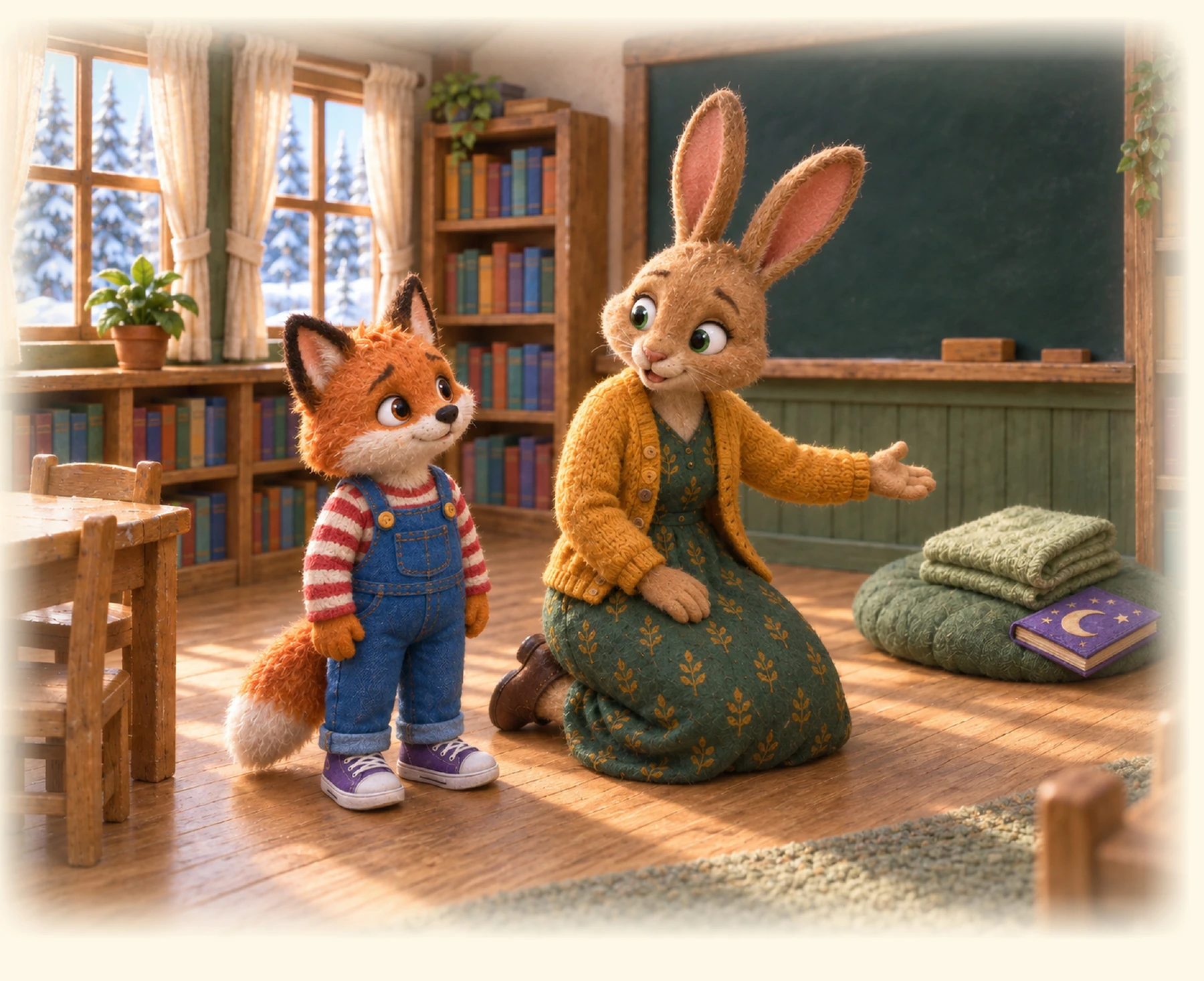
A useful place for the story
The books are designed to open language around feelings, body signals, grief, repair and asking for help. They are not lessons with a required answer.
A child may listen, draw, move, leave with a known adult or return later.
Use story characters and imaginary examples. Never demand personal disclosure to the group.
Quiet, movement, co-regulation, a practical task and words can all be valid starting points.
Follow the DSL, SENCO, pastoral, healthcare and individual-support routes already around the child.
Book-specific support
Each guide has a complete web version and a printable A4 edition.
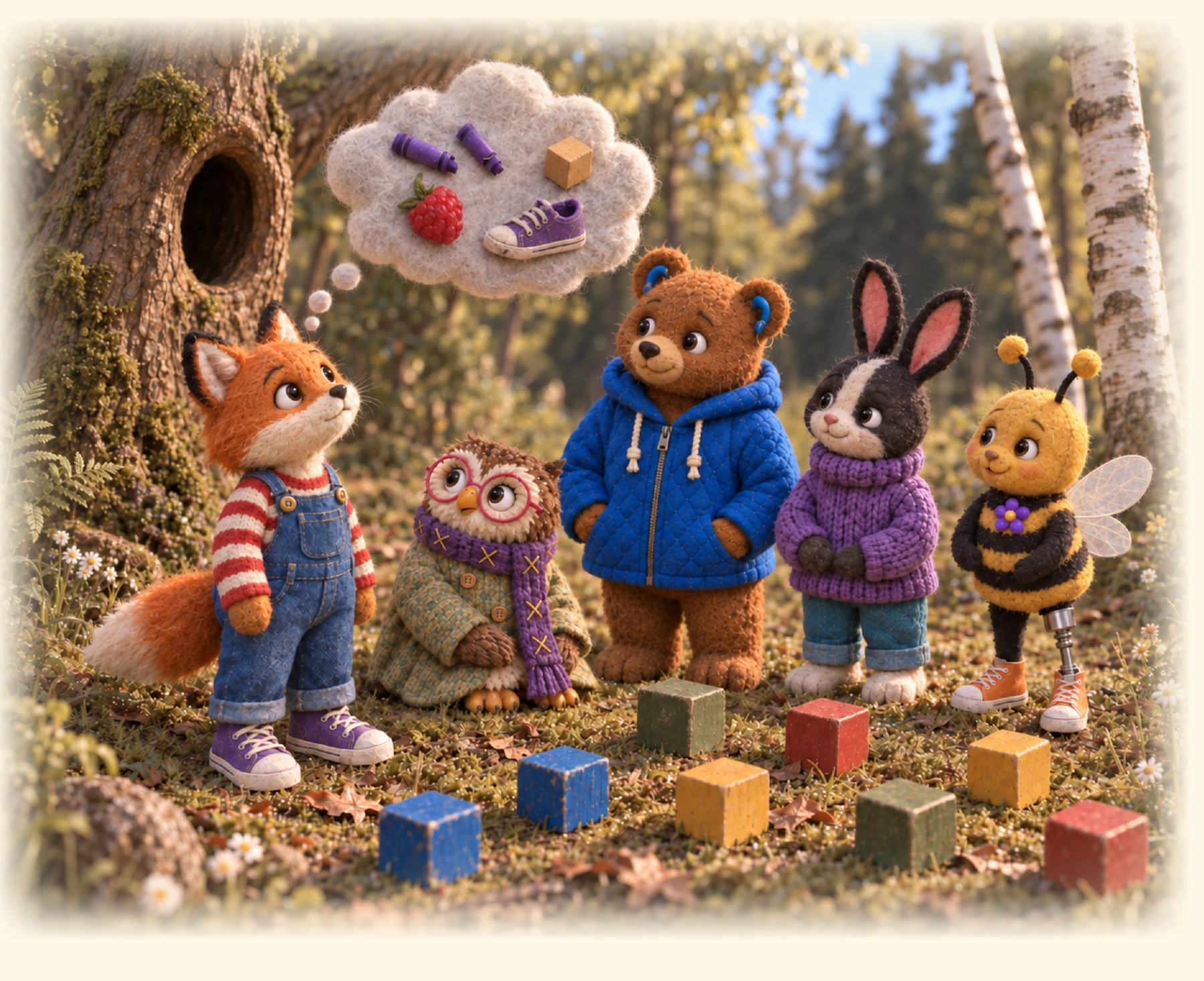
Suggested for ages 3–8; adapt to the group
A trauma-aware read-aloud guide for body signals, frustration, repair and asking for help without turning the story into an interrogation.
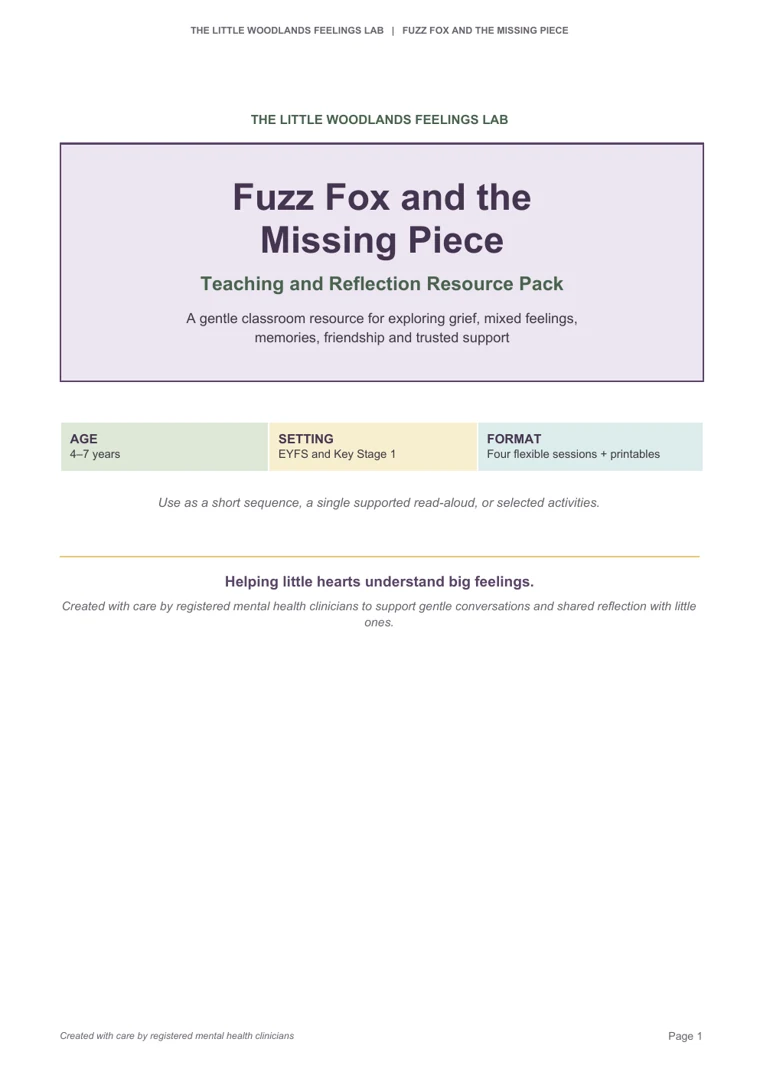
Ages 4–7 · EYFS and Key Stage 1
A complete resource for preparing, reading and reflecting on Fuzz’s story with clear language, optional participation, inclusive adaptations and a planned support route.
Free classroom resources
Every activity has an HTML version, a real PDF and a clear one-class-or-setting printing licence.
Keep the professional boundary clear
If a child shares a concern, listen calmly, avoid promising secrecy and follow your setting’s procedures. These resources do not replace the DSL, SENCO, pastoral team, health services or an individual support plan.