
A warm place for little minds and big feelings

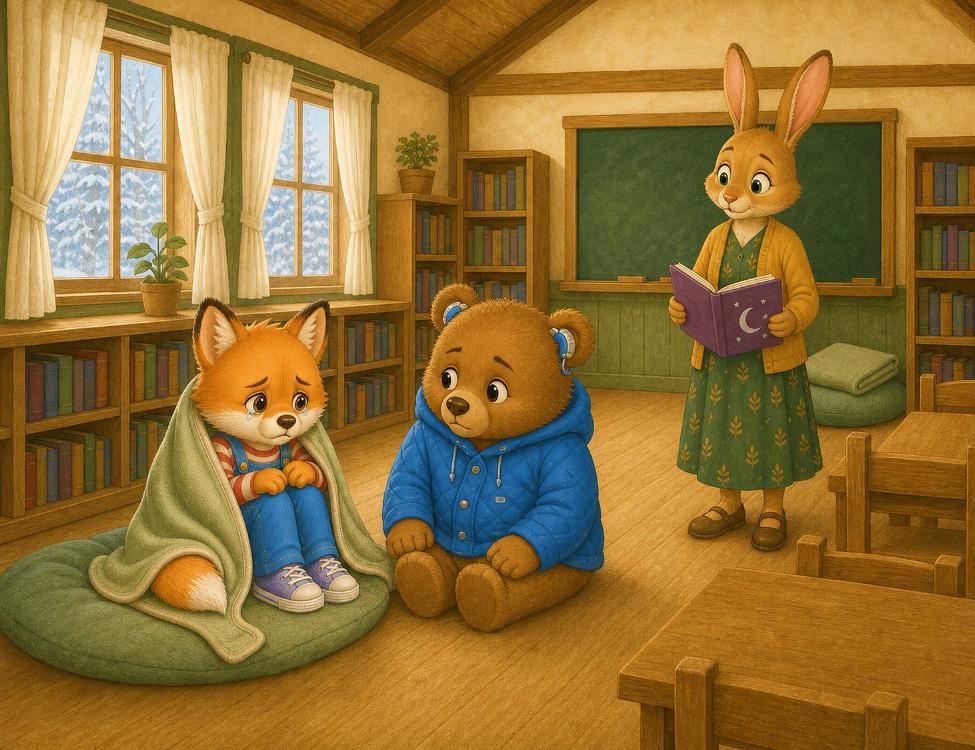
Fuzz resting beneath a blanket in Miss Oakwood’s classroom while Berty sits beside him

Classroom guide

The Missing Piece Classroom Guide

A grief-aware guide for reading a story involving death with clear language, optional participation and respect for different family and cultural practices.

Suggested for ages 5–9; consider readiness and recent loss

PDF · A4 · about 12 KB

Accessible web version

Before you read

  • Read the book and consult the setting’s bereavement and safeguarding procedures.
  • Consider recent deaths, expected absences and known family circumstances without naming a child to the group.
  • Tell families what will be read where this is appropriate to your setting.
  • Use clear words such as ‘died’ and ‘death’; avoid describing death as sleep or a journey.
  • Arrange a quiet alternative and a known adult for children who choose to step out.

What the session may support

These are cautious intentions, not guaranteed outcomes or formal curriculum claims.

  • Recognise that grief can include many feelings with no fixed sequence.
  • Explore remembrance without requiring personal disclosure.
  • Notice helpful forms of quiet, company and predictable choice.
  • Respect different cultural, faith, family and individual approaches to death and memory.

Optional read-aloud prompts

  1. 1

    What changed for Fuzz after Grandpa died?

  2. 2

    How did Miss Oakwood offer help without making Fuzz speak?

  3. 3

    What did Berty do when words were not needed?

  4. 4

    Why might the empty puzzle space still belong in the picture?

  5. 5

    What are some ways story characters could remember somebody?

Optional activities

Offer a path.
Never require a disclosure.

Memory stars

Use memories belonging to a fictional character, shared community figure or a child’s own choice. Leaving a star blank is allowed.

A choice of remembrance

Offer drawing, a word, an object, music, silence or no activity. Do not rank one form of remembrance above another.

Quiet-corner review

Ask what makes a pause space feel supportive rather than like exclusion, and what helps a child return.

Stories we carry

Adults can model a brief, boundaried memory without inviting comparison or asking children to match it.

Safeguarding note

Keep the route
around the child.

Never ask a child to describe a death to the group. If a child discloses harm, fear or a safeguarding concern, respond according to your setting’s procedure. The resource is not therapy and does not replace professional assessment or support.

Ask about classroom use