A warm place for little minds and big feelings

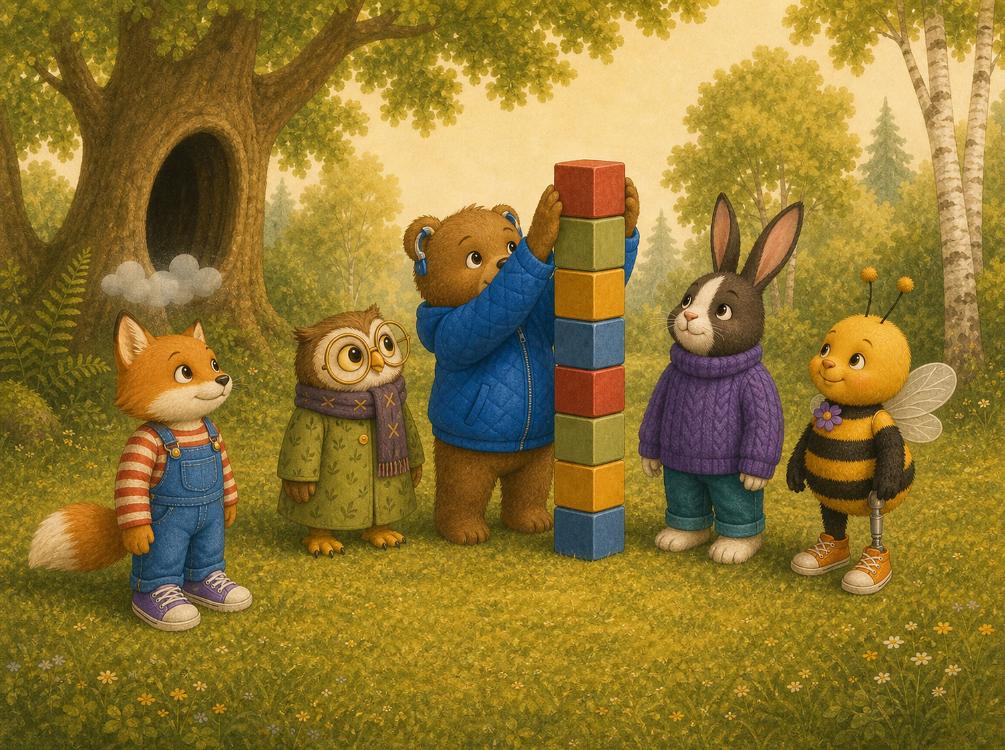
Fuzz and his woodland friends rebuilding together beneath the old oak

Classroom guide

The Storm Inside Classroom Guide

A trauma-aware read-aloud guide for body signals, frustration, repair and asking for help without turning the story into an interrogation.

Suggested for ages 3–8; adapt to the group

PDF · A4 · about 12 KB

Accessible web version

Before you read

  • Read the story first and identify a calm-space option that does not feel punitive.
  • Plan how children may pass, draw, move or listen without answering.
  • Avoid scheduling the discussion immediately after a known incident involving a child in the group.
  • Know who will provide individual follow-up if the story opens a concern.

What the session may support

These are cautious intentions, not guaranteed outcomes or formal curriculum claims.

  • Notice that behaviour can communicate a need before words arrive.
  • Explore body signals connected to frustration or overwhelm.
  • Identify several forms of help rather than one prescribed calming strategy.
  • Model repair and reconnection after something goes wrong.

Optional read-aloud prompts

  1. 1

    What small things collected in Fuzz’s cloud?

  2. 2

    How did his tummy, head and heart try to communicate?

  3. 3

    What did the friends do after the tower fell?

  4. 4

    Which kinds of help did Olive and Berty make room for?

  5. 5

    What could a classroom signal for ‘I need a little help’ look like?

Optional activities

Offer a path.
Never require a disclosure.

Weather without disclosure

Invite children to choose weather for a story character or an imaginary day. Nobody has to describe their own experience.

Body-signal silhouettes

Mark where a fictional character might feel tight, hot, fast, shaky or still. Emphasise that bodies communicate differently.

Rebuild together

Use blocks or loose parts to practise beginning again after a shared structure falls, with no blame attached.

Calm-space choices

Co-design a small menu: quiet, movement, water, sensory object, drawing, trusted adult or returning later.

Safeguarding note

Keep the route
around the child.

If a child shares a concern, listen calmly, do not promise secrecy and follow the setting’s safeguarding procedure. This guide does not replace the DSL, SENCO, pastoral team, healthcare support or an individual plan.

Ask about classroom use